
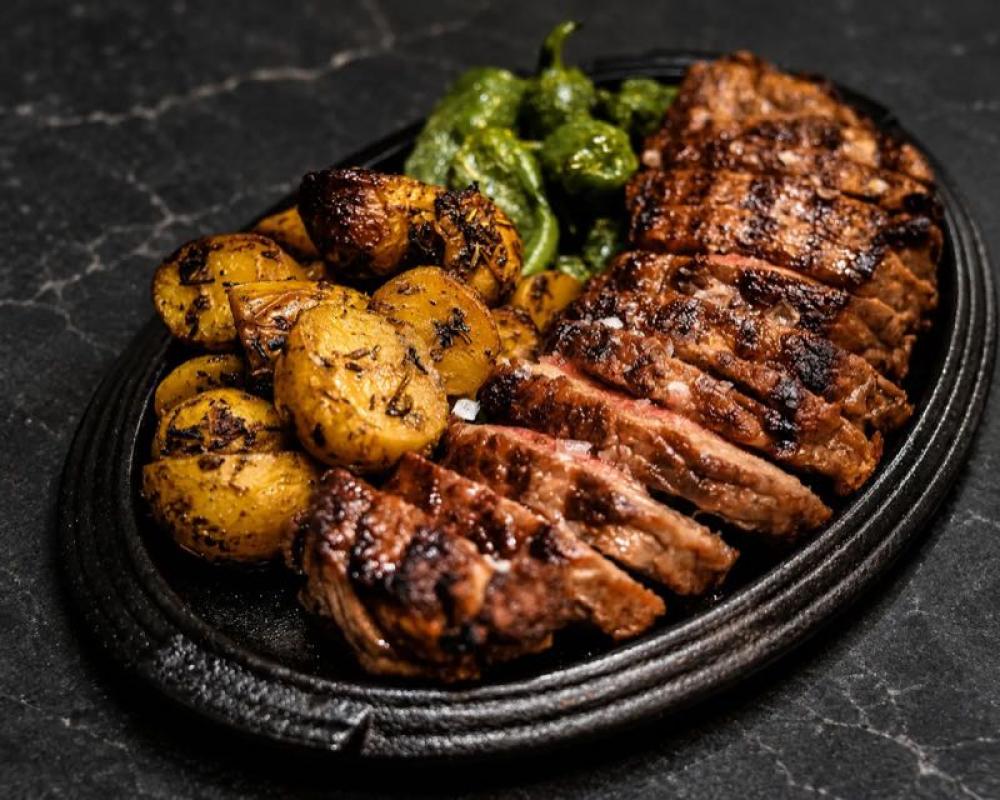
A thermometer rebeefs the inside rather than relying on surface colour, but accuracy depends on placement and correct use. A thin edge or hot bone may not represent the coolest part.
Measuring steak
Insert sideways into the thickest centre, avoiding bone and large fat pockets. Move slightly and slowly to locate the lowest stable central reading, checking another area if the cut is uneven.
Do not use a reading near the browned surface. Allow the stated response time and never leave an instant-read device in the oven unless designed for it. Continuous probes and wires have temperature limits and need protection from direct flame.
Patties and cubes
A suitable fine probe inserted sideways helps with thin burgers. Keep its tip in the centre, not out the other side measuring air or pan heat. For cubes, test the largest piece and several differently positioned skewers.
Whole beef and lamb cuts need 63°C with at least three minutes' rest; mince needs 71°C and reheated leftovers 74°C. Juice colour or firmness cannot replace these readings.
Thermometer care
Clean food-contact parts between measurements and afterward as directed. Do not immerse electronics unless waterproof. Follow manufacturer accuracy-checking or calibration instructions and replace batteries when indicated.
Use a separate chamber or grill-air thermometer if needed. A lid gauge does not measure meat centre, and a meat probe alone does not establish chamber stability. These readings answer different questions.
Must every piece be checked?
More varied thicknesses and positions require more checks. One steak reading may not represent a crowded tray or uneven burger batch. Record thickness, timing and temperature to learn your equipment's behaviour.
Related products from ALRAQI MEATS
Ribeye Steaks - 2 Pieces, 500-560 g, or Beef Burgers - 4 Patties, 400 g. Check the product page for weight, ingredients and cutting options before ordering. Choose a cut suited to the cooking method; a boneless or mixed-meat label alone does not guarantee suitability for quick cooking.
Further guidance
Safe minimum cooking temperatures, Refrigerated food storage, Food thermometers — USDA.