
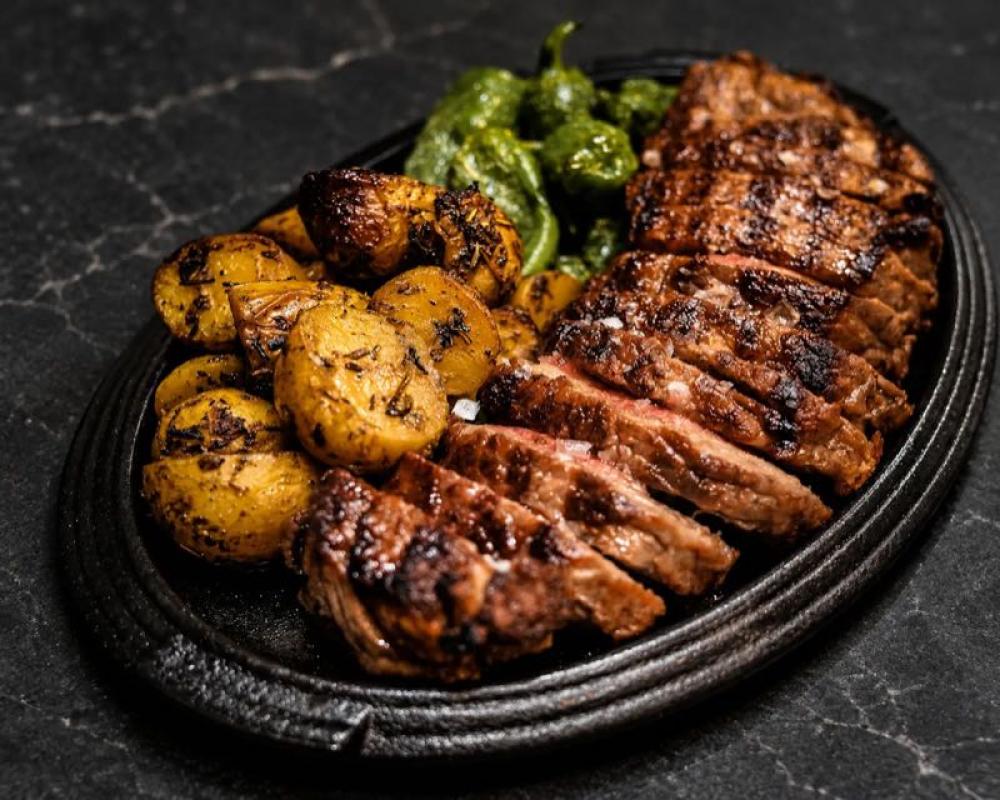
Ribeye cooking starts with thickness and fat distribution. Marbling can enrich flavour but cannot compensate for overcooking or uncontrolled fire. Prepare gentler heat or a suitable oven for thick pieces and monitor the centre.
Clear preparation steps
Bring meat out for preparation when tools are ready and gently dry the surface. Season with salt and pepper, checking existing seasoning first. Multiple sauces are unnecessary when learning ribeye's own flavour.
Heat a suitable heavy pan or clean grill grate, lightly oiling if needed. Leave space around the steak; a pan crowded with large steaks makes browning and monitoring difficult.
Browning fat without constant flames
Brown both sides with appropriate turning and watch fat dripping onto coals. Move to the cooler side during flare-ups. Safely remove excessive pan fat if it obstructs cooking, never pouring near open flame.
A thick side-fat strip can be exposed to heat using steady tongs, with care against splashes. Never hold meat with fingers above a hot surface.
Centre temperature and rest
Probe the thickest meat away from large fat deposits. Once colour is right, finish more gently rather than burning the crust. Whole beef cuts need 63°C and at least three minutes' rest.
Rest on a clean plate, then serve whole or sliced across the grain. Add a little herb butter or separate sauce without masking flavour. Never use the raw-meat plate for serving.
Does ribeye need long marinating?
Not necessarily. Salt, timing and thickness matter more than soaking duration alone. Test a marinade on one steak and record results before treating a full pack or event batch.
Related products from ALRAQI MEATS
Ribeye Steaks - 2 Pieces, 500-560 g, or Striploin Steaks - 2 Pieces, 400-460 g. Check the product page for weight, ingredients and cutting options before ordering. Choose a cut suited to the cooking method; a boneless or mixed-meat label alone does not guarantee suitability for quick cooking.
Further guidance
Safe minimum cooking temperatures, Refrigerated food storage.