
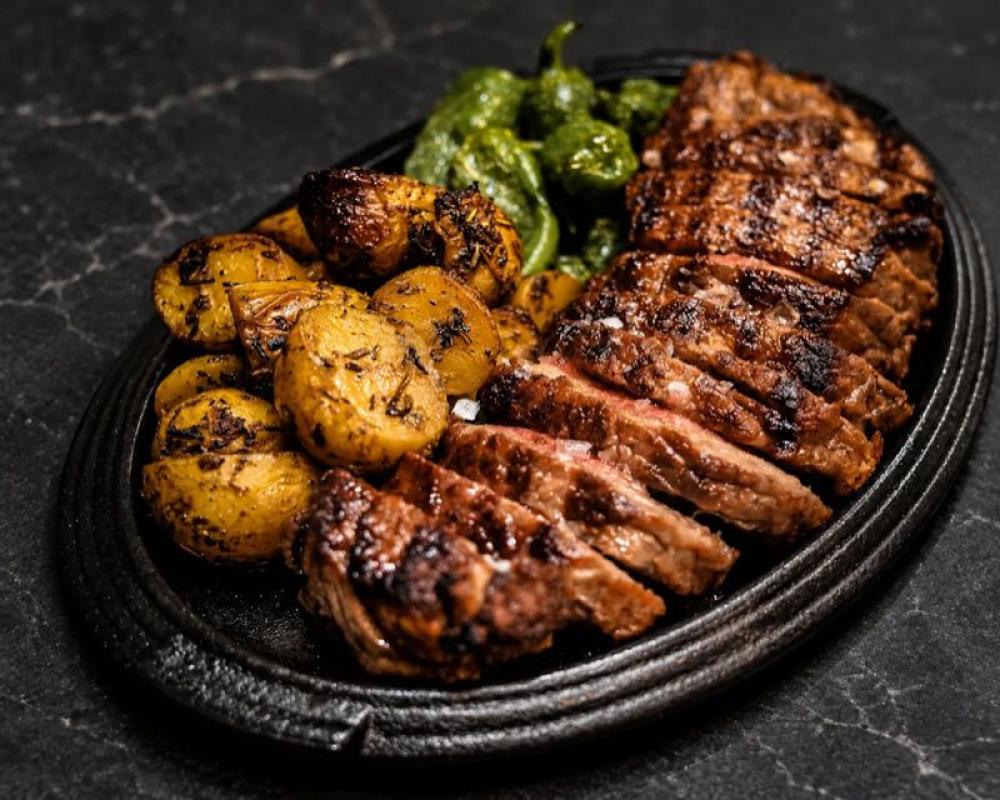
Rest is a short planned stage, not an indefinite wait while the rest of dinner is finished or a reason to remove unverified meat early. Prepare vegetables, sauce and plates first for measured rest followed by prompt service.
Resting and safety
Whole beef and lamb steaks should reach 63°C, then rest at least three minutes under safety guidance. This minimum differs from texture-related recommendations for larger cuts or particular methods.
Centre temperature may rise after removal, but the increase depends on thickness and cooking method. Do not assume a fixed rise to justify early removal. Use actual readings and a reliable method.
Plates and covering
Transfer to a clean plate without raw-meat contact. Cover lightly if the recipe calls for it; trapped steam can soften crust. Leaving steak in a hot pan is continued heating, not ordinary resting.
A warm plate supports service, but an excessively hot one continues cooking. Keep sauce separate and avoid soaking the crust during rest if preserving texture.
Slicing and serving
Identify grain and slice across it with a sharp knife. Cut only what is needed, particularly for large shared steaks. Add moderate clean cooking juices if desired, never liquid from a raw-meat plate.
For lengthy guest delays, use controlled hot holding instead of room-temperature waiting. Maintain 60°C or above, recognising that longer holding affects texture.
Do all steak methods need the same rest?
No. Cut, thickness and heat sequence change recipe recommendations, while the safety minimum remains a separate reference. Follow a reliable method and record results to improve future timing.
Related products from ALRAQI MEATS
Ribeye Steaks - 2 Pieces, 500-560 g, or Striploin Steaks - 2 Pieces, 400-460 g. Check the product page for weight, ingredients and cutting options before ordering. Choose a cut suited to the cooking method; a boneless or mixed-meat label alone does not guarantee suitability for quick cooking.
Further guidance
Safe minimum cooking temperatures, Refrigerated food storage.