
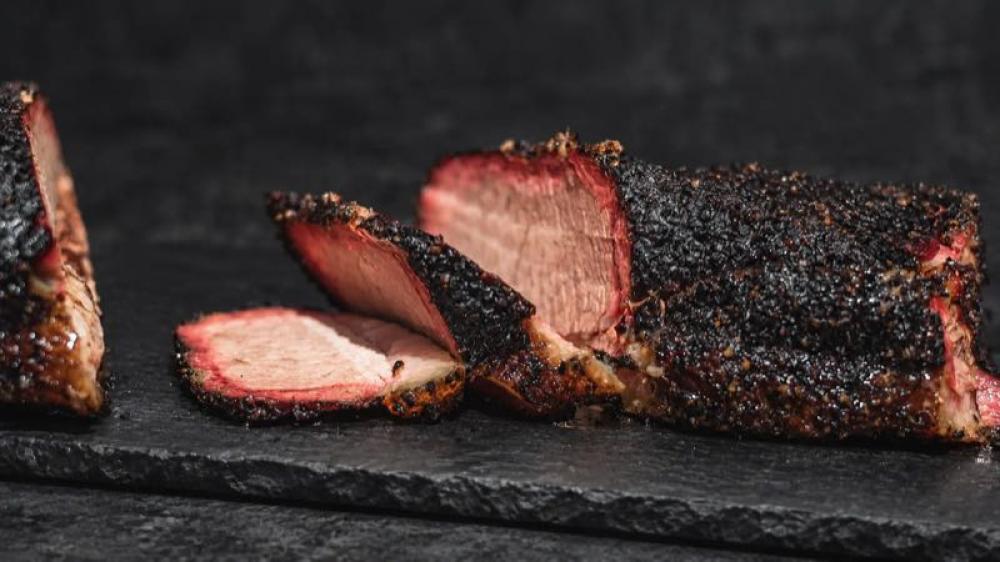
Slicing affects chewiness even after successful cooking. Long fibres cut along the grain resist more than cross-grain slices. Prepare a suitable knife, clean board and service plan, beginning with what will be eaten soon.
Cutting across the grain
Identify fibre lines and cut across them. Flat and point can run differently, requiring rotation or separation. Do not automatically continue one direction from end to end.
Use a pre-seasoning photograph if bark obscures the grain. Cut a small first slice and inspect it: shorter visible fibres help assess the angle.
Thickness and knife technique
Use a sharp slicing knife in smooth motions without crushing pressure. Keep slices consistent, adjusting to firmness. Easily crumbling meat may need slightly thicker slices; firmer meat may suit thinner ones.
No thickness fixes every cooking error. Thin slicing can ease chewing of tough meat but cannot fully compensate for insufficient tenderising time.
Resting and holding
Rest according to a reliable method under safe conditions. Do not leave a large cut on the counter for hours without temperature monitoring. Hot holding requires 60°C or above and suitable measuring tools.
Slice the first serving amount and continue as needed. Early exposure of a large area increases heat and moisture loss. Offer sauce separately and add moderate clean juices if desired.
Handling leftovers
Divide into small portions and chill promptly in shallow containers, not one huge hot mass in a deep vessel. Later reheat to 74°C, taking only the meal portion to reduce repeated reheating.
Related products from ALRAQI MEATS
Boneless Beef - 3 kg, or Ribeye Steaks - 2 Pieces, 500-560 g. Check the product page for weight, ingredients and cutting options before ordering. Choose a cut suited to the cooking method; a boneless or mixed-meat label alone does not guarantee suitability for quick cooking.
Further guidance
Safe minimum cooking temperatures, Refrigerated food storage, Brisket basics — Weber.