
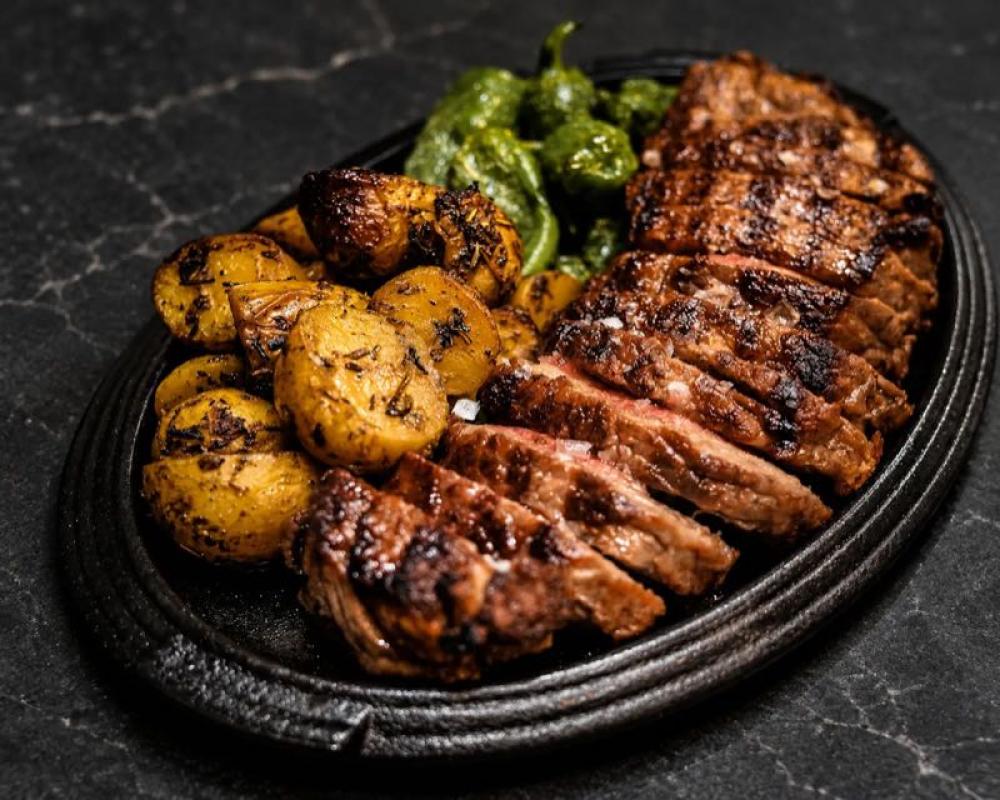
Cutting across the grain means crossing long muscle-fibre lines so each slice contains shorter fibres. It aids chewing but cannot make every tough cut tender regardless of cooking. Read the muscle structure before choosing the angle.
Finding the grain
Look for lines along the surface or cut face and rotate the meat so the knife crosses them. If bark or marinade hides them, inspect a small edge or recall the raw cut's appearance.
Some cuts contain several muscles with different directions. Rotate or separate the other section rather than maintaining one angle. This matters more for some large or combined cuts than others.
Before and after cooking
For shawarma, thinly slice raw meat across the grain and choose a quick-browning cut. Keep it cold and use a sharp knife and stable board. Slicing alone cannot make a tough cut tender in minutes.
Rest cooked steak according to safety guidance before slicing. Use a clean board without raw juices and smooth cutting motions rather than crushing pressure. Match slice thickness to serving style.
Thickness and length
Shorter, thinner sandwich strips are easier to bite than long strands that pull the filling out. Main-dish slices can be broader to show crust and interior. No single size suits every recipe.
Keep shawarma strips evenly thick so very thin ones do not dry while thicker ones finish. Cook in batches. Tenderness depends on muscle, grain direction and heat together, not sauce quantity.
Is diagonal slicing the same as cutting across the grain?
Not necessarily. A diagonal angle changes slice shape and area; its direction relative to fibres determines fibre length in each bite. Combine both when suitable, but identify the grain first.
Related products from ALRAQI MEATS
Striploin Steaks - 2 Pieces, 400-460 g, or Boneless Beef - 3 kg. Check the product page for weight, ingredients and cutting options before ordering. Choose a cut suited to the cooking method; a boneless or mixed-meat label alone does not guarantee suitability for quick cooking.